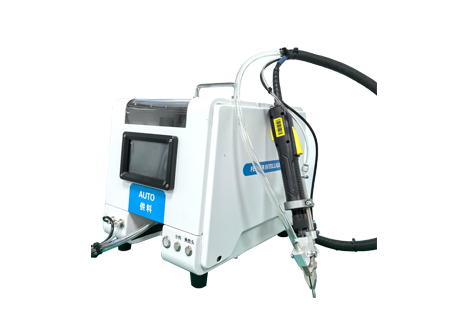

In the rapidly evolving world of industrial automation, the term "automatic feeder screwdriver machine" specifically refers to an advanced industrial automated screw fastening system designed for integration with robots or multi-axis motion platforms. This is distinctly different from handheld automatic screwdrivers used in manual assembly stations. At its core, this system combines a reliable screw feeding mechanism with a precision screwdriver unit, vision guidance, and seamless robot communication. It enables robots to perform repetitive screwdriving tasks with high speed, accuracy, and consistency — critical requirements in modern smart factories. A complete robotic screwdriving setup typically includes:
High-capacity screw feeder
Electric or pneumatic screwdriver unit
Industrial robot (SCARA, Cartesian, or 6-axis)
AI-powered vision system
PLC controller and HMI interface
Conveyor or positioning fixtures
These systems have become indispensable as manufacturers push toward lights-out manufacturing and higher levels of automation.
The operation of an automatic feeder screwdriver machine in a robotic environment follows a highly synchronized, repeatable workflow that maximizes robot uptime and overall line efficiency.
The process starts with bulk screws loaded into a vibratory hopper. The system orients each screw using vibration and mechanical selectors. Depending on screw size and application, blow feed propels screws through tubes at high speed, while vacuum feed offers gentler handling for micro screws and deep-hole applications. This ensures screws arrive at the pickup point in perfect orientation every time.
The robot arm moves to the screw pickup location. Advanced systems use SCARA robots for high-speed planar movements, Cartesian systems for precise linear positioning, or 6-axis robots for complex angles and orientations. Real-time vision guidance adjusts for any positional deviations.
Once the screw is secured by the bit, the robot positions it over the workpiece. The screwdriver then applies programmable torque, depth, and angle control. Servo-driven electric drivers provide the highest precision, while pneumatic options excel in high-torque scenarios.
AI vision systems inspect the fastening in real time. Torque monitoring, missing screw detection, cross-threading alerts, and full data logging ensure every assembly meets quality standards before the line moves forward. This closed-loop process allows for continuous operation with minimal human intervention.
Many manufacturers invest heavily in robots but underestimate the importance of a reliable screw feeding system. Without an automatic feeder, even the most advanced robot will suffer from frequent interruptions. Common issues without a proper feeder include manual reloading, unpredictable cycle times, dropped screws, and frequent jams that cause the robot to idle. These problems lead to inconsistent takt time and reduced overall equipment effectiveness (OEE). In contrast, a well-designed automatic feeder screwdriver machine delivers:
Continuous, stable screw supply
Predictable and optimized cycle times
Minimal operator intervention
Maximized robot utilization and efficiency
| Aspect | Without Automatic Feeder | With Automatic Feeder Screwdriver Machine |
|---|---|---|
| Screw Loading | Manual, frequent stops | Continuous automatic |
| Cycle Time | Variable and unpredictable | Stable and optimized |
| Labor Demand | High (constant reloading) | Minimal supervision |
| Robot Efficiency | Lower due to idle time | Significantly higher |
This reliability is what transforms robotic screwdriving from a promising concept into a high-ROI reality.
Ideal for high-speed production lines handling M1 to M5 screws. Compressed air propels screws quickly through feed tubes, making this the fastest option for high-volume applications like consumer electronics and automotive components.
Best suited for micro screws (M0.6–M1.2), deep-hole fastening, and delicate PCB assembly in electronics manufacturing. Vacuum systems provide gentle, precise handling that prevents damage to small or fragile fasteners.
Effective for larger standard screws in metal products. Magnetic pickup offers simplicity and reliability where extreme precision is less critical than robust performance.
Delivers high torque for demanding applications in automotive, industrial equipment, and new energy sectors. These systems excel in environments requiring powerful, consistent fastening force.
Successful integration goes far beyond mechanical mounting. Modern systems communicate through industrial protocols such as Ethernet/IP, Profinet, and digital I/O signals. PLC controllers act as the central brain, synchronizing the feeder, screwdriver, vision system, and robot movements. Advanced setups also connect to MES platforms for real-time production data collection and traceability. Vision systems provide closed-loop feedback, allowing the robot to adapt dynamically to part variations.
Proper integration ensures smooth handshakes, error recovery, and seamless operation across the entire cell.
Selecting the right system requires careful evaluation of several critical factors:
Screw Size Compatibility: Full range from M0.6 to M6
Torque Requirements: Precision and range needed for your products
Robot Type: Compatibility with SCARA, Cartesian, 6-axis, or collaborative robots
Production Volume: Matching feeder speed to line takt time
Vision and AI Capabilities: For complex or high-mix production
Future Expansion: Support for MES, Industry 4.0, and additional axes
Selection Checklist:
√ Verify screw types and sizes with actual samples
√ Test feeding reliability and jam rate
√ Confirm robot communication protocol support
√ Evaluate vision system accuracy
√ Review torque accuracy and data logging
√ Assess after-sales support and spare parts availability
These systems deliver value across diverse sectors. In electronics manufacturing, they enable precise assembly of smartphones and circuit boards. Automotive plants use them for interior modules, battery packs, and powertrain components where torque accuracy is safety-critical. The new energy sector relies on them for solar inverters and EV battery assembly. Home appliance manufacturers benefit from faster, more consistent production of large white goods, while medical device makers appreciate the traceability and cleanliness standards these systems support.
Robotic screwdriving presents several persistent challenges that a quality automatic feeder addresses effectively:
Screw Jams: Advanced feeders with intelligent separation minimize jams and include auto-recovery features.
Missing Screws: Vision systems and sensors detect and alert instantly.
Cross-Threading: Precise positioning and depth control prevent misalignment.
Inconsistent Torque: Closed-loop servo control ensures every screw meets specifications.
Robot Idle Time: Continuous feeding keeps the robot working at full capacity.
The future points toward deeper AI integration, digital twins for simulation, predictive maintenance, and cloud-based analytics. 5G connectivity will enable remote monitoring, while tighter MES integration will support fully autonomous, self-optimizing production lines.
An automatic feeder screwdriver machine is an integrated industrial system that combines screw feeding, robotic positioning, precision screwdriving, and vision guidance. It enables robots to automatically pick, place, and fasten screws with high accuracy and consistency, making it essential for modern automated production lines.
The system operates through a synchronized process that includes screw feeding, robot pickup, precise positioning, controlled fastening, and real-time quality inspection. Screws are automatically delivered in the correct orientation, and robots execute fastening tasks using programmed torque and vision feedback to ensure accuracy and repeatability.
Without an automatic feeder system, robots often experience downtime due to manual screw loading, jams, or inconsistent supply. An automated solution ensures continuous screw delivery, stable cycle times, reduced labor dependency, and significantly improved overall equipment efficiency.
The main types include blow feed systems for high-speed production, vacuum-fed systems for small screws and precision applications, magnetic systems for standard metal fasteners, and pneumatic screwdriving machines for high-torque industrial use. Each type is suited to different production requirements and screw specifications.
Selection depends on factors such as screw size range, torque requirements, robot compatibility, production volume, and the need for vision systems or data integration. It is important to test real samples, verify feeding reliability, and ensure compatibility with existing automation systems before making a final decision.