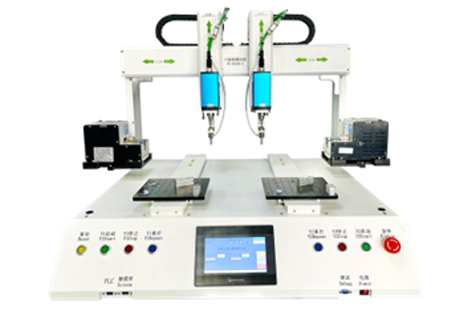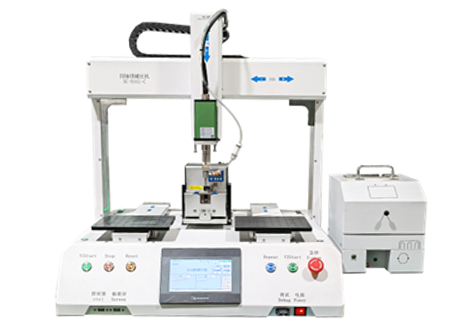

Automated screw driving systems significantly enhance manufacturing efficiency by delivering precise, consistent screw fastening with minimal errors. These systems outperform manual operations through superior speed, accuracy, and production tracking capabilities.
Increased productivity: 3-5× faster than manual screw driving
Improved quality: <0.1% defect rate
Reduced labor costs: Up to 60% labor savings
Enhanced traceability: Complete production data recording
Modern automated screw driving systems integrate advanced technology to streamline the assembly process. By incorporating multiple synchronized components, these systems achieve remarkable efficiency and consistency.
Automated Screw Feeder
Precisely orients and supplies screws
Utilizes vibrational sorting technology
Precision Driving Mechanism
Applies optimal torque with consistent accuracy
Incorporates torque monitoring capabilities
Integrated Control System
Coordinates all operational parameters
Facilitates seamless equipment integration
Ideal for manufacturing:
Electronic components
Automotive assemblies
Medical devices
Automated systems provide measurable improvements over manual operations:
| Metric | Automated System | Manual Operation |
| Speed | 1-1.5 sec/screw | 5-8 sec/screw |
| Accuracy | ±5% torque tolerance | ±15% torque tolerance |
| Uptime | 95-98% | 70-85% |
| Defect Rate | <0.1% | 1-3% |
When evaluating automated screw driving solutions, manufacturers should consider:
Production Requirements
Throughput: 2,400-3,600 units/hour
Compatibility with existing lines
Technical Specifications
Torque range: 0.05-10 Nm
Screw size: M1-M8
Material compatibility
Integration Considerations
Space requirements
Power consumption
Maintenance access
Conduct thorough process validation
Train maintenance personnel
Establish preventative maintenance schedule
Monitor key performance indicators
Automated screw driving systems provide manufacturers with reliable, efficient assembly solutions that deliver rapid ROI through enhanced productivity (30-50% improvement) and quality assurance (90% defect reduction).
[1] Smith, J., et al. (2022). "Automated Assembly Systems in Modern Manufacturing." Journal of Manufacturing Technology, 15(3), 245-260.
[2] Robotic Industries Association. (2023). "Automated Fastening Systems: Performance Benchmarks and Implementation Guidelines." Technical Report RIA-2023-047.
[3] International Organization for Standardization. (2021). "ISO 14583: Industrial automated screw driving systems - Performance requirements and test methods."
John Miller is an industrial automation specialist with 15 years of experience implementing advanced assembly systems for Fortune 500 manufacturers.