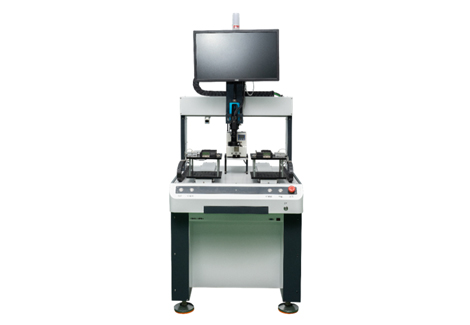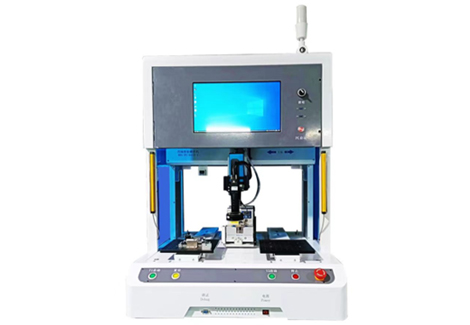

If you search for auto screw machine, you may find two different meanings. In traditional machining, an auto screw machine can refer to an automatic lathe used to manufacture screws, shafts, and precision metal parts. However, in modern industrial automation, an auto screw machine usually refers to an automatic screw fastening system used for product assembly.
This article focuses on the second meaning: an industrial automatic screw fastening machine used in production lines. It is not a screw-making lathe. It is a system designed to automatically feed screws, position the screwdriver, apply controlled torque, inspect the fastening result, and complete screw assembly with minimal human intervention.
For manufacturers in electronics, automotive, medical devices, home appliances, new energy, and industrial equipment, an auto screw machine can improve assembly speed, reduce manual labor, stabilize torque quality, and support traceable production.
Because the term auto screw machine can be confusing, it is important to distinguish between screw manufacturing and screw assembly.
| Item | Screw Machine Lathe | Industrial Auto Screw Machine |
|---|---|---|
| Main purpose | Produces screws or precision metal parts | Fastens screws into products |
| Industry context | Machining and metalworking | Assembly automation |
| Main process | Cutting, turning, forming | Feeding, positioning, tightening, inspection |
| Typical output | Screws, shafts, pins, small metal parts | Completed screw fastening on workpieces |
| Main users | CNC machining factories, metal part suppliers | Electronics, automotive, appliance, medical, new energy manufacturers |
If your goal is to assemble products faster and more consistently, you need an automatic screw fastening machine, not a screw machine lathe.
An industrial auto screw machine works through a repeatable automated process. The machine receives screws in bulk, sorts them, delivers them to the fastening unit, positions the screwdriver, tightens the screw, and checks whether the result meets the required standard.
A typical working process includes four main steps.
The process begins with bulk screws loaded into a hopper, vibratory bowl, or screw feeding unit. The feeding system separates, orients, and delivers each screw in the correct direction.
Common screw feeding methods include:
| Feeding Method | Best For | Key Advantage |
|---|---|---|
| Blow feed | High-speed production lines | Fast screw delivery through air pressure |
| Vacuum feed | Small screws, deep holes, delicate components | Better pickup control and positioning |
| Magnetic feed | Standard metal screws | Simple structure and stable operation |
The screw feeding stage is critical because unstable feeding can cause jams, missing screws, robot waiting time, and production downtime.
After the screw is supplied, the system must move the screwdriver to the correct fastening point. Depending on the application, an automatic screwdriving machine may use an XYZ Cartesian platform, SCARA robot, 6-axis robot, or multi-axis servo system.
Advanced systems may also use vision cameras to locate the workpiece in real time. If the part position shifts slightly, the machine can compensate for the offset and adjust the fastening path automatically.
This is especially useful for high-mix production, flexible fixtures, and products with multiple screw positions.
Once the screwdriver reaches the correct position, it applies controlled torque and depth. Programmable torque parameters help prevent under-tightening, over-tightening, stripped screws, and product damage.
A high-quality automatic screw fastening machine may support:
Torque control
Angle control
Depth control
Speed control
Screw count control
Tightening result verification
Alarm output for abnormal fastening
For industries such as automotive electronics, medical devices, and battery modules, stable torque control is essential because fastening quality can directly affect product reliability.
Modern auto screw machines do more than tighten screws. They can also inspect fastening results and record production data.
Common inspection functions include:
Missing screw detection
Floating screw detection
Cross-threading alert
Torque abnormality detection
Screw height inspection
Workpiece position verification
Fastening result data logging
This supports quality traceability and helps factories meet stricter production management requirements. For manufacturers moving toward Industry 4.0, data collection and production visibility are becoming increasingly important.
A complete auto screw machine is made of several integrated modules. Each module affects the final performance of the system.
| Component | Function |
|---|---|
| Screw feeding system | Sorts, orients, and supplies screws automatically |
| Automatic screwdriver | Tightens screws with controlled torque |
| Motion platform or robot | Moves the screwdriver to different fastening points |
| Vision inspection system | Locates workpieces and checks screw positions |
| PLC control system | Controls the machine process and signal communication |
| HMI interface | Allows operators to adjust parameters and monitor alarms |
| Torque controller | Ensures torque accuracy and records fastening data |
| Fixture system | Holds the workpiece in a stable position |
| Error detection system | Detects missing screws, floating screws, torque failure, and other issues |
When evaluating an auto screw feeder machine, buyers should not only look at the screwdriver itself. The feeding stability, motion accuracy, control system, fixture design, and after-sales support are equally important.
Different production lines require different machine configurations. Choosing the right type depends on product size, screw quantity, fastening position, production volume, and automation level.
A desktop auto screw machine is a compact solution for benchtop assembly, small-batch production, prototyping, and flexible workstations. It is often used by SMEs, R&D departments, and factories that need semi-automatic assistance rather than a full production line.
Best for: small production, prototyping, manual-assisted workstations
Automation level: semi-automatic to automatic
Key advantage: compact structure and flexible operation
An inline automatic screw fastening machine is designed for integration into conveyor-based production lines. It can work together with upstream and downstream equipment to support continuous automated assembly.
Best for: mass production, conveyor lines, continuous assembly
Automation level: fully automatic
Key advantage: stable production rhythm and high efficiency
A robotic screw fastening robot uses a SCARA robot, 6-axis robot, or other robotic platform to complete fastening tasks. It is suitable for products with multiple screw positions, different models, or complex assembly angles.
Best for: flexible production, complex workpieces, high-mix manufacturing
Automation level: high
Key advantage: strong flexibility and easier product changeover
A multi-axis screw fastening system can tighten multiple screws at the same time or complete complex fastening paths with multiple controlled axes. It is often used in high-volume production where cycle time is critical.
Best for: high-volume production and complex products
Automation level: fully automatic
Key advantage: high speed and strong production capacity
| Machine Type | Best Application | Automation Level |
|---|---|---|
| Desktop auto screw machine | Small production and prototyping | Semi-automatic |
| Inline auto screw machine | Continuous assembly lines | Fully automatic |
| Robotic screw fastening machine | Flexible and high-mix production | High |
| Multi-axis screw fastening machine | High-volume and complex parts | Fully automatic |
An auto screw machine is widely used in industries that require repeated screw fastening, stable torque, high output, and consistent product quality.
Electronics Manufacturing. Electronics products often use small screws and delicate components. An auto screw feeder machine helps assemble smartphones, tablets, laptops, cameras, routers, smart devices, and consumer electronics with better consistency and less manual handling.
Automotive Industry. Automotive manufacturers use automatic screw fastening machines for interior parts, electronic modules, sensors, dashboards, lighting systems, battery modules, and powertrain-related components. Stable torque is important because fastening quality can affect safety and long-term reliability.
Medical Devices. Medical device assembly often requires clean operation, process consistency, and traceability. Automatic screw fastening systems can help reduce manual variation and support controlled production processes.
Home Appliances. Home appliance manufacturers use auto screw machines for washing machines, refrigerators, air conditioners, kitchen appliances, vacuum cleaners, and other white goods. Automation helps improve assembly efficiency and reduce operator fatigue.
New Energy Industry. In the new energy sector, automatic screwdriving machines are used for battery packs, solar inverters, EV charging stations, energy storage systems, and power electronics. These applications often require stable torque, process data, and reliable fastening quality.
Industrial Equipment. Control cabinets, motors, instruments, machinery parts, and industrial devices often require robust fastening. Auto screw machines can improve consistency and reduce repetitive manual work in these assembly processes.
Compared with manual screw fastening, an industrial auto screw machine provides benefits in speed, quality, labor efficiency, and process control.
| Aspect | Manual Assembly | Auto Screw Machine |
|---|---|---|
| Screw feeding | Manual pickup | Automatic feeding |
| Torque consistency | Operator-dependent | Controlled and repeatable |
| Fastening speed | Limited by operator skill | Stable cycle time |
| Defect detection | Difficult and inconsistent | Sensor and vision-based detection |
| Traceability | Limited | Real-time data logging |
| Labor dependence | High | Significantly reduced |
| Operator fatigue | High in repetitive work | Lower |
| Production scalability | Limited | Easier to expand |
Main benefits include:
Higher production efficiency
More stable screw tightening quality
Lower defect rate
Reduced missing screws
Reduced operator fatigue
Better production traceability
Easier integration with automated lines
More consistent output during production ramp-up
For factories facing labor shortages, unstable manual assembly quality, or high-volume production pressure, an automatic screw fastening machine can be a practical upgrade.
Selecting the right auto screw machine requires more than comparing machine prices. The system must match your screws, workpieces, cycle time, production layout, and future automation needs.
Confirm Screw Specifications. Start with screw size, length, head type, material, coating, and magnetic properties. These factors determine the feeder design, feeding method, screwdriver bit, torque range, and pickup method. Common screw size compatibility may range from M0.6 to M6, depending on machine configuration.
Evaluate Workpiece Structure. Check whether the screw holes are flat, deep, angled, hidden, or close to other components. Deep-hole fastening may require a vacuum-fed system, while complex angles may require a 6-axis robot or customized tooling.
Define Production Volume and Cycle Time. For low-volume production, a desktop or semi-automatic solution may be enough. For high-volume assembly lines, an inline or robotic automatic screwdriving machine may be more suitable.
Check Torque Accuracy Requirements. Different materials require different torque control. Plastic parts may need lower torque to avoid cracking, while metal components may require higher torque and stronger fastening force.
Decide Whether Vision Is Needed. If product positioning is not perfectly fixed, or if the line handles multiple models, vision guidance can improve flexibility and reduce fixture dependence.
Confirm Integration Requirements. Factories should check whether the machine can connect with PLC, MES, robots, conveyors, barcode systems, and production management software. This is important for automated lines and traceability requirements.
Test Real Screws and Workpieces. Before purchasing, always test the system with real screw samples and actual workpieces. Testing can reveal feeding problems, screw jamming risks, torque instability, fixture issues, and positioning challenges.
Use this checklist before selecting a supplier:
Does the machine support your screw diameter, length, material, and head type?
Is the feeding method suitable for your screw and workpiece?
Can the machine meet your required cycle time?
Does it provide accurate torque control and feedback?
Does it support missing screw and torque abnormality detection?
Is vision positioning required for your product?
Can it connect with PLC, MES, conveyors, or robots?
Is the software easy for operators to use?
Can the supplier provide fixture design and sample testing?
Are spare parts, training, and technical support available?
Automatic screw fastening machines are typically introduced when manual assembly begins to cause quality or efficiency issues, helping to systematically optimize production processes. In manual operations, torque control often varies between operators or shifts, which can lead to loose screws; in contrast, servo-controlled fastening systems significantly improve torque consistency. Cross-threading, often caused by misalignment during manual work, can be effectively reduced through vision guidance, depth control, and stable positioning. In high-speed production environments, manual inspection may fail to detect missing screws, whereas automated detection systems can identify and respond to such issues in real time. Additionally, since screw fastening is a highly repetitive task, prolonged manual work can lead to operator fatigue, affecting both efficiency and stability. By introducing automation, manufacturers can improve working conditions while eliminating manual bottlenecks, ultimately increasing throughput and stabilizing cycle times.
Dongguan Kingdom Machine Technology Co., Ltd. specializes in intelligent automatic screw fastening systems for industrial manufacturers. Located in Songshan Lake, Dongguan, Kingdom provides solutions for electronics, automotive, home appliances, new energy, medical devices, and other assembly applications.
Kingdom’s auto screw machine solutions can support different production needs, from handheld screwdrivers and semi-automatic workstations to fully automated screw fastening systems for production lines.
Kingdom solutions can include:
AI-powered vision positioning
Screw compatibility from M0.6 to M6
Smart error detection
Real-time production data analytics
Torque control and traceability
Customized fixture and tooling design
Integration with PLC, HMI, robots, and automated lines
For manufacturers planning to improve screw assembly efficiency, Kingdom can evaluate screw samples, workpiece structure, fastening requirements, cycle time, and production line layout before recommending a suitable automatic screw fastening machine.
No. A screw machine lathe is used for manufacturing screws or precision components, while an auto screw machine in industrial automation is designed for assembling products by automatically feeding and fastening screws.
An automatic screwdriver is typically a handheld or semi-automatic tool used for manual assistance, whereas an auto screw machine is a fully integrated system that includes screw feeding, positioning, torque control, inspection, and data recording.
An auto screw feeder machine is responsible for sorting, orienting, and delivering screws to the fastening unit. In most production setups, it works together with an automatic screwdriver and a motion system to form a complete automation solution.
Some systems can handle multiple screw sizes, but changeover depends on components such as the feeder, screwdriver bit, delivery tube, torque settings, and software configuration. Testing all intended screw types before purchase is recommended for optimal performance.
Selection should be based on screw specifications, product structure, fastening positions, cycle time, torque requirements, vision system needs, and integration requirements. It is important to validate the solution through real sample testing with an experienced supplier before finalizing the decision.