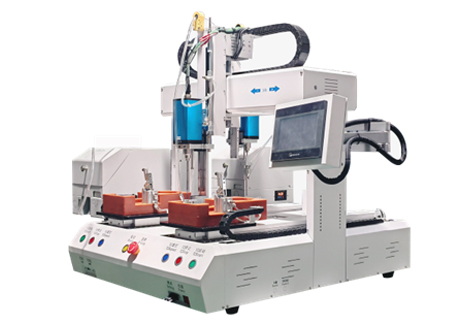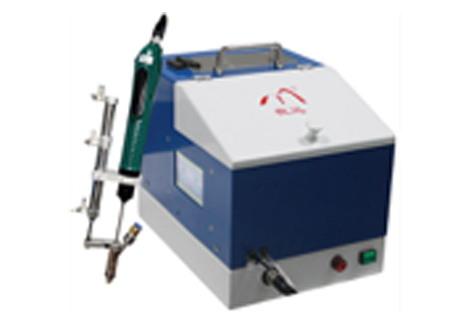

Got screw fastening automation on your mind? Struggling with whether to pick pneumatic or vacuum-fed systems? Choosing the right method can seriously boost efficiency and cut costs!
Pneumatic screwdriving machines, also called blow-fed or air-blown screw machines, use high-pressure air to deliver screws quickly. This method is ideal for specific screw types and boasts high efficiency due to rapid delivery and flexible setup.
I remember grappling with these exact questions for my own projects, wondering if I was making the best choices. Let's break down the options so you can pick the right one for your production needs.
Dealing with slow screw fastening? Feeling stuck with methods that just aren't cutting it for speed? It's time to explore faster solutions.
Pneumatic screw tightening machine achieves its speed by using high-pressure air to rapidly transport screws through a tube to the screwdriver head. This "blow-feeding" process eliminates the need for repeated vacuum suction and movement, drastically cutting down cycle times.
From my experience, the sheer speed of blow-fed systems is a game-changer. Imagine screws delivered like bullets in under half a second, even over several meters! This efficiency comes from how the system integrates screw delivery with the fastening process itself. Unlike traditional methods, the feeder can be placed almost anywhere near the machine, giving you huge flexibility in your workshop layout. This flexibility also helps in setting up production lines.
Blow-feeding uses air pressure to move screws. Here's a look at how it compares to vacuum-feeding:
| Feature | Pneumatic (Blow-Fed) | Vacuum (Suction-Fed) |
| Delivery Method | High-pressure air pushes screws | Vacuum negative pressure sucks screws |
| Speed | Very fast; screws delivered quickly | Slower; requires repeated suction and movement |
| Flexibility | Feeder can be placed remotely | Feeder usually closer to the work area |
| Screw Type | Best for screws with specific length-to-diameter ratio | Good for short or odd-shaped screws |
| Cost | Generally higher due to complex feeder | Lower due to simpler feeder |
| Ideal Use | High-volume, speed-critical tasks | Complex hole positions, short screws |
This table highlights why I lean towards blow-feeding for speed. The entire process becomes much smoother because the screw is delivered right to the driving head, ready for fastening. This design saves valuable seconds on each screw, which really adds up over a production run. It changes how I think about workflow on the shop floor.
Are you struggling with tricky screw positions or very short screws? Does your current system fail when dealing with unusual shapes? Some fastening jobs just need a different approach.
Vacuum-fed screwdriving systems, also called suction-fed, use vacuum negative pressure to pick up screws and move them to the fastening point. They are highly effective for short or oddly shaped screws and excel in reaching complex or recessed screw holes that other methods struggle with.
When I first started out, I saw vacuum-fed systems as the reliable workhorse for precision. They might not win races, but they tackle the challenges that blow-fed systems can't. The main strength of vacuum-fed systems is their ability to handle diverse screw types and reach difficult spots. Imagine having to fasten a tiny screw in a deep, narrow recess; that's where vacuum-fed shines. Its simple feeding structure also makes it appealing.
Vacuum-fed systems have distinct advantages for certain tasks:
Handling Odd Shapes: If your screws are very short or have unusual geometries, a vacuum system is often the only reliable option. Blow-feeding can cause such screws to tumble or jam in the delivery tube.
Complex Hole Positions: For deep countersunk holes or areas with surrounding obstructions, vacuum systems provide the precision needed. The slender nozzle can often fit into spaces where a blow-fed gun might not.
Simpler Setup: The feeding mechanism for vacuum systems is generally less complex and thus can be more cost-effective to implement initially.
Reduced Jamming: Since screws are individually picked up rather than blown through a tube, the risk of jams due to screw orientation or shape is significantly lower.
I found that while the efficiency of blow-fed systems is appealing, sometimes the practicality of a vacuum-fed system outweighs the speed difference. When I encounter a product with many different screw types or incredibly tight spaces, I always recommend looking at vacuum-fed first. It saves headaches in the long run.
Feeling stuck between choosing speed and versatility? Are you wondering how to make the best decision for your specific products? The right choice hinges on a simple calculation.
The key to choosing between pneumatic (blow-fed) and vacuum (suction-fed) screwdriving machines is the screw's length-to-diameter ratio and the screw hole's characteristics. A simple rule helps guide this decision to ensure optimal efficiency and avoid common issues.
I've learned that making the right choice isn't about guessing; it's about understanding your screws. This decision drastically impacts your production line's overall efficiency and, ultimately, your bottom line. It's not just about the machine; it's about the screw itself.
To figure out which system suits your needs, I always go back to one formula:
Length-to-Diameter Ratio = Total Screw Length ÷ Screw Head Diameter
Here's how I apply this rule:
Ratio Greater Than 1.3: If your screw's length-to-diameter ratio is greater than 1.3, and there are no obstructions around the screw hole, then a pneumatic (blow-fed) system is usually the best choice. These screws are long and slender enough to travel smoothly through the air tube without jamming. This is where you get the high efficiency and speed benefits. My experience shows this ratio is crucial for smooth operation.
Ratio Less Than 1.3: If the ratio is less than 1.3, or if the screw is very short and stubby, a vacuum (suction-fed) system is safer. Short, squat screws tend to tumble and get stuck in blow-fed tubes, causing costly downtime. Also, if your screw holes are deep countersinks or have nearby obstructions, vacuum-fed systems offer the precision needed to navigate these challenges without issue.
I always advise my clients to measure their screws carefully and consider the screw hole environment. Choosing the right method based on these factors prevents headaches down the line and ensures your automation investment pays off. It’s all about fitting the solution to the specific problem.
Choosing between pneumatic and vacuum-fed screwdriving machines hinges on your screw's length-to-diameter ratio and hole accessibility. Selecting wisely maximizes efficiency, minimizes cost, and prevents production snags.