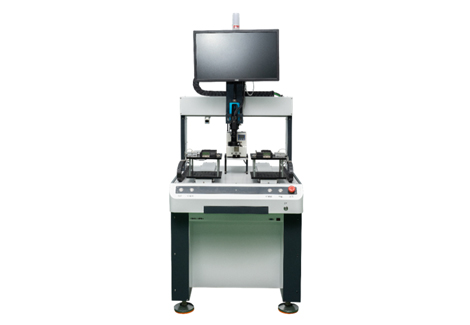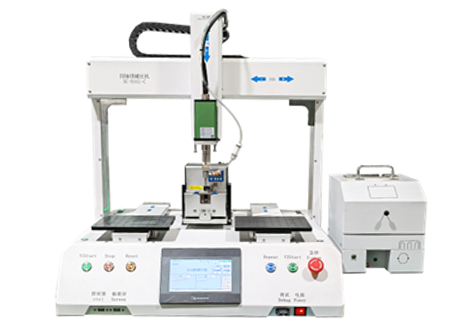

The cost of an automatic screw driving machine depends on the level of automation, screw feeding method, fastening requirements, production speed, and integration features. A basic automated screwdriver setup may require a lower investment, while a fully customized system with multiple axes, vision positioning, torque monitoring, and production data management requires a higher budget.
The most important factor is not the initial purchase price, but whether the system delivers measurable improvements in labor savings, production efficiency, fastening consistency, and long-term manufacturing stability.
For production lines evaluating an auto screw machine, understanding the engineering factors behind the cost helps companies select the right solution without over-investing or choosing an under-capacity system.
There is no fixed price because automatic screwdriving machines are engineered according to the specific assembly process.
Unlike standard equipment, an automated screw system is usually configured based on:
Product size and structure
Number of screw fastening points
Screw specifications
Required cycle time
Accuracy requirements
Automation level
Quality inspection requirements
Production line integration
Two machines that look similar externally may have very different internal designs. For example, a single-station screw fastening machine for one product model requires far less engineering than a multi-axis system designed for different products with automatic loading, vision positioning, and traceability.
A reliable quotation requires understanding the complete fastening process, not only the number of screws being installed.
Several engineering factors directly influence equipment cost.
The mechanical architecture is one of the biggest cost factors.
Common configurations include:
Single-axis or semi-automatic systems
Suitable for:
Simple screw positions
Operator-assisted assembly
Medium production volumes
Advantages:
Lower investment
Simple operation
Easy maintenance
Cartesian automatic screw machines
Suitable for:
Fixed screw locations
High-volume production
Stable product designs
Advantages:
High repeatability
Fast positioning
Efficient cycle times
Multi-axis robotic screw systems
Suitable for:
Complex products
Multiple fastening angles
Flexible production requirements
Advantages:
High adaptability
Reduced fixture limitations
Support for product variation
The more movement flexibility and automation capability required, the higher the engineering cost.
The screw feeding mechanism also affects the overall price.
An auto screw machine may use:
Bowl feeder systems
Linear screw feeders
Vacuum pickup feeding
Blow feeding systems
Customized feeding solutions
Standard screws are easier to handle, while small screws, long screws, washer screws, and special fasteners may require customized feeder designs.
Incorrect screw feeding selection can create production instability, so feeder engineering is an important investment area.
Fastening quality requirements significantly affect machine cost.
Basic systems may only control screw tightening time or preset torque.
Advanced systems can include:
Torque monitoring
Angle control
Tightening curve analysis
Automatic defect detection
Process data recording
For industries such as electronics, automotive components, and medical devices, these quality control functions are often necessary because fastening failures can create expensive product issues.
Vision systems increase automation capability by allowing machines to identify product position and adjust fastening locations.
Vision integration is useful for:
Product variation
Loose positioning tolerances
Flexible production lines
Multiple product models
However, it adds:
Cameras
Software development
Image processing
Calibration requirements
For highly consistent products with accurate fixtures, vision may not always be necessary.
The value of an automatic screwdriving machine is measured through productivity improvements and operational savings.
The main ROI benefits include:
Manual screw fastening requires operators to repeatedly perform:
Screw pickup
Positioning
Tightening
Quality checking
Automation reduces repetitive work and allows operators to focus on higher-value tasks.
An automatic screw system can provide:
Stable cycle times
Continuous operation
Reduced assembly variation
Faster production output
For high-volume production, even a small reduction in cycle time can create significant annual savings.
Manual assembly can introduce variation caused by:
Operator fatigue
Different tightening habits
Inconsistent torque application
An automatic screw driving machine maintains controlled fastening parameters for every product.
Poor screw fastening may result in:
Product returns
Rework
Customer complaints
Production delays
Automated fastening with monitoring functions helps prevent these costs.
A simple ROI calculation usually considers:
Equipment investment
Labor savings
Increased output
Reduced defect rate
Maintenance costs
The payback period depends on production volume and labor structure.
Selecting equipment based only on initial price can create additional costs later.
An under-specified system may cause:
If machine cycle time cannot meet production requirements, manufacturers may still need additional labor or extra machines.
A feeder designed without considering screw characteristics may experience:
Screw jams
Missed feeding
Double feeding
Production interruptions
A machine designed only for one product may become unsuitable when:
New models are introduced
Screw locations change
Production requirements increase
Some low-cost systems may not support:
Torque data recording
Production history
Quality reports
For industries requiring strict process control, missing data capabilities can become a major limitation.
A properly designed automatic screw driving machine should consider both current production needs and future expansion.
The more technical information available, the more accurate the machine design and quotation will be.
Manufacturers should provide:
Product dimensions
Product material
Assembly structure
Product positioning method
Screw diameter
Screw length
Screw head type
Screw material and coating
Special features such as washers or captive designs
Number of screws per product
Screw tightening sequence
Required torque range
Accuracy requirements
Quality inspection requirements
Target output per hour
Working hours per day
Required automation level
Existing production line conditions
Expected product changes
Additional models
Expansion plans
With complete application details, suppliers can recommend the correct machine structure instead of offering a generic solution.
The cost varies significantly depending on automation level, machine structure, feeding system, and customization requirements. Simple systems require less investment, while advanced multi-axis machines with inspection functions require a larger budget.
Automatic screw machines include precision motion systems, screw feeders, controllers, safety systems, and quality monitoring functions. The investment covers not only the screwdriver but the complete automated fastening process.
ROI depends on production volume, labor costs, cycle time improvement, and defect reduction. High-volume production lines typically achieve faster payback because labor and efficiency savings accumulate quickly.
Yes, but the machine configuration must match the screw specifications. Different screw sizes may require feeder adjustments, interchangeable tooling, or customized feeding solutions.
A standard machine is designed for common fastening applications, while a customized system is engineered around specific products, screw positions, production speed, and quality requirements.
The lowest purchase price does not always provide the lowest total cost. Equipment reliability, production capacity, maintenance requirements, and future flexibility should also be considered.
The cost of an automatic screw driving machine is determined by engineering requirements rather than a simple equipment price list. The right solution balances automation level, fastening quality, production speed, and future manufacturing needs.
For companies evaluating an auto screw machine, the best investment is not necessarily the cheapest machine, but the system that delivers stable production performance, lower operating costs, and reliable fastening quality throughout its service life.
A properly selected automatic screwdriving solution can become a long-term production asset by improving efficiency, reducing defects, and creating a more predictable manufacturing process.