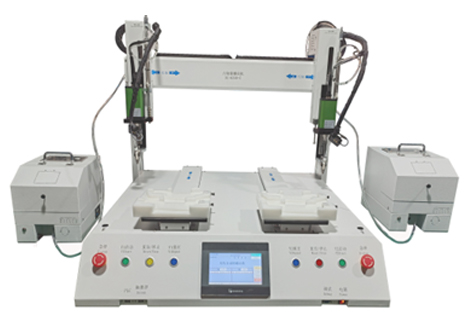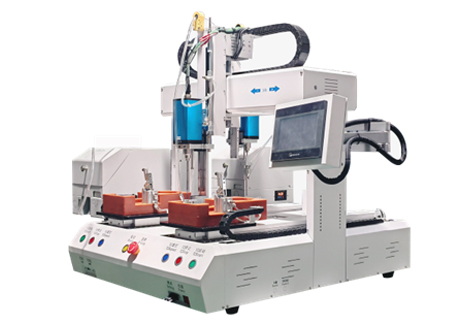

Stripped, lifted, and cross-threaded screws create significant challenges in automated screwdriving systems, often requiring the removal of affected products from the production line for manual correction. This process is both time-consuming and costly, disrupting efficiency. Fortunately, solutions exist to mitigate these issues, allowing for smoother and more reliable assembly processes.
Automated screw assembly machines typically operate smoothly until a screw becomes stripped, lifted, or cross-threaded, leading to misalignment issues that disrupt production. Understanding the root causes of these problems is essential for addressing them effectively.
A stripped screw head occurs when the engagements in the screw head wear down, making it difficult or impossible for a screwdriver bit to grip the screw properly. While this issue is commonly associated with older screws, it can also affect new screws during the assembly process. Stripping in manufacturing often results from poor part quality, excessive torque, incorrect alignment between the screwdriving spindle and the part, or insufficient downward force on the driver bit.
Lifted or high screws occur when the screw fails to seat properly, often because the hole in the part is not deep enough, causing the screw to bottom out. In some cases, a significant gap can lead to the screw popping out as the part relaxes. The primary cause of lifted screws is excessive torque required to seat the screw properly, which exceeds the design's torque specification. This is frequently due to undersized holes resulting from molding or casting imperfections.
Cross-threading happens when the screw's threads do not align correctly with the threads in the part being fastened. This misalignment is typically caused by improper positioning of the parts, mismatched thread pitches, or inserting the screw at an incorrect angle. Even when torqued, a cross-threaded screw may appear secure but fails to provide sufficient clamp force, compromising the joint's integrity.
Addressing screw-related issues begins with identifying their causes. Kingdom's automatic screw driving machines feature advanced controllers that perform detailed data analysis to pinpoint the exact issue with each affected screw. This allows experts to diagnose the problem accurately and implement effective solutions tailored to the specific issue.
Handheld electric and pneumatic screwdrivers are susceptible to operator errors, which can lead to screw-related issues. Transitioning to an automatic screwdriver system with an automatic screw feeder significantly reduces these errors. In such systems, the manual tasks of retrieving and presenting screws are eliminated, as the system automatically feeds the next screw to the driver after each operation. This streamlined process minimizes human error and enhances efficiency.
Fixtured screwdriving systems can also produce misaligned or ill-fitted screws, often due to operator error. Kingdom’s automated fixtured screwdriving systems remove the operator from the process, significantly reducing or completely eliminating these issues. By automating the screwdriving process, these systems ensure consistent and precise screw placement.
Screw-related problems frequently arise in hard-to-reach or confined areas, leading to dropped, misaligned, cross-threaded, or improperly torqued screws. Vacuum-based screwdriving technology offers an effective solution. In this system, a vacuum screwdriver uses a suction tube with constant negative pressure to securely pick up and position the screw at the hole. This technology, available for both handheld and automated screwdriving machines, is particularly valuable in human-robot collaboration systems, ensuring precise screw placement in challenging environments.
Kingdom’s handheld and stationary automated screwdriver equipment provides a robust solution to issues with improperly aligned or stripped screws. With decades of experience designing and building assembly equipment solutions since 1956, Kingdom understands the challenges faced in manufacturing. Their mission is to support partners in producing high-quality products with maximum process reliability and minimal errors, fostering mutual success through innovative and dependable solutions.