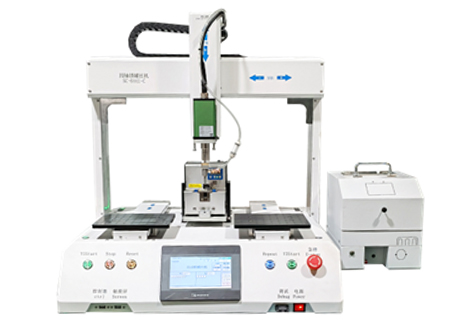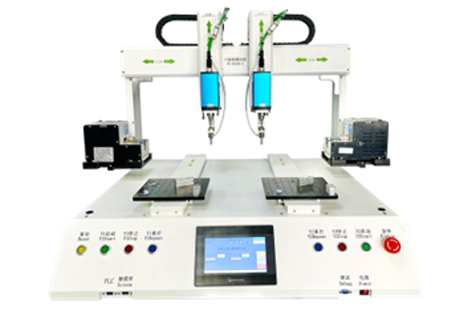

A multi-spindle screw tightening system delivers the greatest value when a product requires multiple screws to be tightened repeatedly in the same assembly cycle. For high-volume production with stable screw locations, a multi spindle screwdriver can significantly reduce takt time, improve consistency, and lower labor costs compared with single-spindle fastening.
However, multi-spindle automation is not always the best choice. Single-spindle systems remain advantageous for products with frequent model changes, complex screw patterns, or low production volumes. The right decision depends on screw quantity, cycle time targets, product variation, and return-on-investment requirements.
For manufacturers producing thousands or millions of identical assemblies, investing in multi spindle screw machines often provides faster payback by increasing throughput and improving process stability.
A traditional single-spindle screwdriver tightens one screw at a time. While this approach offers flexibility, the overall assembly cycle becomes longer when a product contains multiple fastening points.
A multi spindle tightening machine changes this process by using multiple screwdriver heads that operate simultaneously. Instead of completing screws sequentially, several screws can be tightened in one operation.
The main production improvements include:
The biggest advantage of multi-spindle automation is parallel operation. If a product requires six screws, a six-spindle system can potentially complete the fastening process in one cycle instead of six separate steps.
This reduces:
Operator movement
Machine idle time
Assembly takt time
Labor requirements
For high-volume manufacturing, even a few seconds saved per unit can create significant productivity gains.
Manual or single-spindle processes may introduce variation due to operator handling, positioning differences, or inconsistent cycle execution.
A multi-spindle system provides:
Fixed screw positions
Controlled torque parameters
Repeatable fastening sequences
Better process monitoring
This is particularly important for industries where screw torque directly affects product reliability.
Modern multi spindle screw machines can be integrated with robotic loading systems, conveyor production lines, vision inspection, and automated assembly equipment.
This allows manufacturers to build complete fastening solutions rather than isolated screwdriver stations.
A multi spindle screwdriver improves efficiency by tightening multiple screws simultaneously, reducing the number of fastening cycles required for each product.
The productivity advantage becomes more significant when:
Products have many screws
Screw positions are fixed
Production volume is high
The same product model runs continuously
For example, consider an assembly requiring eight screws:
Single-spindle process:
Move to screw position
Tighten screw
Repeat eight times
Eight-spindle process:
Position tool
Tighten eight screws simultaneously
Complete fastening in one cycle
The difference becomes substantial when multiplied by thousands of units per day.
Multi-spindle automation is especially effective in:
Products such as appliances, electronic housings, and control modules often require multiple screws placed in consistent patterns.
Automotive electronic modules, interior components, and mechanical assemblies frequently use repeated screw layouts suitable for simultaneous tightening.
High-volume products with stable designs can achieve significant productivity improvements through automated parallel fastening.
When the same component is produced continuously, a dedicated multi spindle tightening machine can provide excellent cycle-time reduction.
Although multi-spindle automation offers speed advantages, single-spindle systems remain valuable for many manufacturing environments.
If a factory produces many models with different screw locations, a single spindle system may require less tooling adjustment.
A multi-spindle system usually requires customized tooling to match a specific screw pattern. Frequent product changes can reduce the expected return on investment.
For small batches or prototype manufacturing, the cost and setup time of a multi-spindle machine may not be justified.
Single-spindle solutions are often more practical because they provide:
Lower initial investment
Easier programming
Faster product changeover
Some products require screws to be installed at different angles, depths, or sequences. A flexible single-spindle screwdriver may handle these situations more effectively.
Choosing between single-spindle and multi-spindle tightening requires evaluating more than just speed.
A multi spindle tightening machine can achieve excellent accuracy when screw positions are stable and tooling is properly designed.
However, accuracy depends on:
Fixture precision
Screw location tolerance
Tool alignment
Torque control system
For precision applications, manufacturers should verify the repeatability of the complete system rather than only the screwdriver itself.
Multi-spindle systems require customized tooling to maintain correct spacing between screwdriver heads.
Tooling design must consider:
Screw distance
Product geometry
Access limitations
Screwdriver alignment
Although initial tooling costs may be higher, the investment can be recovered quickly in high-volume production.
Single-spindle machines generally provide faster model switching.
Multi-spindle systems are optimized for dedicated production because changing spindle arrangements or fixtures may require additional setup time.
Manufacturers should compare:
Daily production volume
Number of product models
Changeover frequency
Expected product lifecycle
| Production type | Recommended solution | Reason |
|---|---|---|
| Low-mix, high-volume production | Multi spindle screw machines | Maximum throughput and fastest ROI |
| Stable product with many screws | Multi spindle screwdriver | Parallel fastening reduces cycle time |
| High-mix, low-volume production | Single-spindle screwdriver | Greater flexibility and easier changeover |
| Prototype and development production | Single-spindle system | Lower investment and easier adjustment |
| Long-term mass production | Multi spindle tightening machine | Better automation efficiency and consistency |
A practical selection rule is:
Choose multi-spindle automation when the product design is stable and production volume is high.
Choose single-spindle solutions when flexibility and frequent changes are more important than speed.
A multi spindle screwdriver is not simply a faster version of a single-spindle tool. It is a production strategy designed for manufacturers who need repeatable, high-speed fastening with minimal variation.
For low-mix, high-volume manufacturing, multi spindle screw machines can provide significant benefits through shorter takt times, improved consistency, and reduced labor requirements.
For high-mix production environments, single-spindle systems may remain the better choice because of their flexibility and lower setup complexity.
The best investment decision depends on production volume, screw quantity, product stability, and automation goals. When the same assembly is produced continuously, a multi spindle tightening machine can become a key factor in improving manufacturing efficiency and long-term competitiveness.
A multi spindle screwdriver is an automated tool that tightens multiple screws simultaneously using several screwdriver heads.
Use it when products have fixed screw locations, high production volumes, and a need for shorter cycle times.
No. They are best for stable, repetitive production rather than frequent product changes.
Yes. It can reduce cycle time by tightening multiple screws in parallel.
Production volume, screw quantity per product, labor costs, cycle-time improvement, and product lifecycle determine the return on investment.