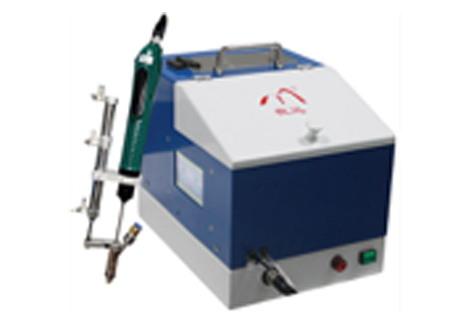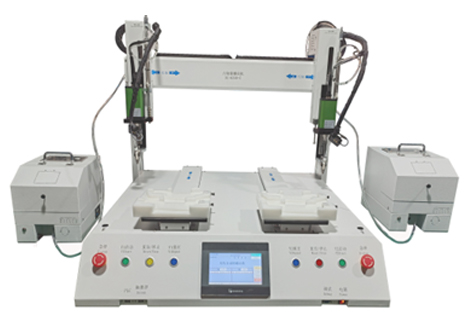

To receive an accurate quotation for an automatic screwdriving solution, manufacturers should provide detailed information about the screws, workpiece, production requirements, and quality expectations. A supplier cannot properly evaluate machine structure, tooling, feeding method, or automation level based only on a request such as “Please send a price for an automatic screwing machine.”
The more complete the technical information provided, the faster a supplier can recommend the right screwdriving system, estimate project cost, and determine whether a standard machine or customized automated screw driving system is required.
Before requesting a quote, manufacturers should prepare:
Product drawings or physical samples
Screw specifications and samples
Required production capacity
Screw tightening requirements
Quality inspection requirements
Automation expectations
This information allows suppliers to design a reliable automatic screw fastening machine that matches actual production conditions instead of providing an inaccurate estimate based on assumptions.
An automatic screwdriving project is not simply a matter of selecting a screwdriver and adding a feeder. Each application requires evaluation of multiple engineering factors.
The final machine configuration depends on:
Product geometry
Screw type and size
Screw quantity per product
Assembly direction
Production speed requirements
Operator involvement
Inspection requirements
For example, two products may both require four screws, but the automation solution can be completely different if:
One product has flat screw locations
One requires angled fastening
One has strict torque requirements
One requires vision positioning
A supplier needs technical details to determine:
Screw feeding method
Number of screwdriver heads
Fixture design
Motion system
Control system
Optional inspection functions
Without this information, any quotation is only a rough estimate and may not represent the final machine cost.
The workpiece is one of the most important factors in designing a reliable screwdriving system.
Manufacturers should provide:
Useful information includes:
3D CAD files
Product assembly drawings
Screw hole locations
Product dimensions
Material information
Physical samples are often highly recommended because they allow engineers to verify:
Screw accessibility
Fixture requirements
Clamping method
Potential interference problems
Screw details directly affect feeder and screwdriver selection.
Suppliers need information such as:
Screw diameter
Screw length
Screw head type
Screw material
Thread specification
Surface treatment
Different screws may require different feeding technologies.
For example:
Small lightweight screws may require vacuum pickup
Magnetic screws may use magnetic bits
Long screws may require specialized feeding methods
Providing actual screw samples is often the fastest way for suppliers to evaluate compatibility.
Manufacturers should also define fastening requirements, including:
Torque requirements determine screwdriver selection and control accuracy.
Important details include:
Target torque value
Torque tolerance
Torque measurement requirements
Some products require precise screw height control or flush installation.
Suppliers need to know whether the process requires:
Torque control only
Depth control
Both torque and depth monitoring
If screws must be tightened in a specific order, this should be communicated before machine design.
Some products require:
Cross tightening patterns
Multiple tightening stages
Pre-tightening and final tightening
These requirements influence the structure of the automatic screw fastening machine.
Production volume and cycle time requirements directly determine the automation level.
A low-volume application may only require a single-axis automatic screwdriver, while high-volume production may require a multi-station or multi-spindle solution.
Suppliers usually need to know:
Required units per hour
Working hours per day
Current production output
Future capacity targets
A compact semi-automatic solution may be sufficient when:
Product variety is high
Production quantities are limited
Operators are involved in loading
A fully automated automated screw driving system may be more suitable when:
Product models are stable
Demand is continuous
Labor reduction is important
High-speed applications may require:
Automatic loading
Multiple screwdrivers
Conveyor integration
Robot handling
Automatic inspection
Cycle time targets help suppliers avoid over-designing or under-designing the system.
Not every application requires vision, but it should be discussed when product positioning or quality verification is important.
A vision system may be recommended when:
Vision can identify screw holes and compensate for small product positioning variations.
Vision-guided positioning can reduce manual fixture changes.
Inspection functions can confirm:
Screw presence
Screw position
Fastening completion
Abnormal conditions
For industries such as automotive electronics, medical devices, and high-value electronics, manufacturers may require process data recording.
A screwdriving system can be equipped with traceability features such as:
Torque data recording
Tightening curve monitoring
Barcode scanning
Production history storage
These functions help manufacturers identify process problems and maintain consistent product quality.
After reviewing samples, drawings, and production requirements, an experienced supplier can evaluate:
The supplier can recommend:
Manual loading or automatic loading
Single or multiple screwdriver heads
Desktop or inline automation
Standard or customized equipment
Engineers can determine whether the application requires:
Bowl feeder
Linear feeder
Vacuum pickup
Magnetic pickup
Customized feeding components
A technical evaluation can confirm:
Estimated cycle time
Automation feasibility
Required tooling
Potential production challenges
With complete information, suppliers can provide a more accurate quotation covering:
Equipment cost
Tooling requirements
Optional inspection systems
Integration requirements
This prevents unexpected costs later in the project.
Requesting a quotation for an automatic screwdriving machine requires more than providing a product name or asking for a general price. The quality of information shared with the supplier directly affects quotation accuracy and final machine performance.
Manufacturers should prepare detailed information about screws, products, tightening requirements, production targets, and quality expectations before contacting suppliers.
With complete technical details, suppliers can design a suitable screwdriving system, recommend the right automation level, and develop an automated screw driving system that improves efficiency, reliability, and long-term production value.
A well-prepared quotation request is the first step toward building a successful automatic screw fastening machine solution.
Provide product drawings, screw samples, production volume, torque requirements, and automation expectations.
A preliminary estimate is possible, but accurate design usually requires samples or detailed drawings.
Screw size, material, and head design determine the feeding method and screwdriver configuration.
No. Vision is mainly needed when positioning accuracy, product variation, or traceability requirements are high.
The timeline depends on machine complexity, customization level, testing requirements, and production goals.